REGIONAL DISPARITIES ARE MAKING IT DIFFICULT FOR CHILDREN AND YOUTH TO SEE THEIR DOCTORS
Understanding the “Percent of 10th graders who saw a doctor in the past two years” indicator: To drive meaningful change for kids and families, we rely on data indicators which are specific, measurable pieces of information that show how children are doing across key areas like health, education, and economic stability. One foundational indicator in our KIDS COUNT® data project is the percentage of children and youth in our state who regularly visit their health care provider. Findings from these data can help advocates and policymakers assess and improve our state’s healthcare system by removing accessibility obstacles. Click here to see county-level data.
Overview
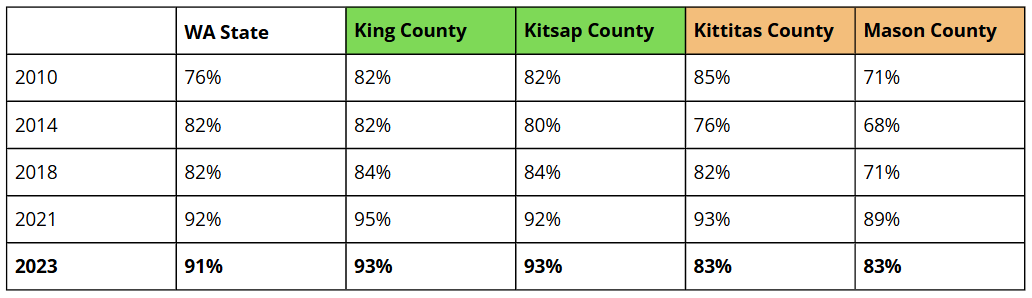
This indicator helps to assess the accessibility of health care for teens. Teens who have trouble getting care—because of cost, lack of insurance, or not having a nearby doctor—may only go to the doctor in an emergency or not at all. Overall, Washington State has seen an increase in youth reporting having seen a doctor, however, regional disparities persist. Some counties with larger metropolitan areas, such as King and Kitsap Counties, report above-state-average rates of 10th-graders visiting the doctor in the past two years at 93% each. Whereas comparatively rural adjacent counties, such as Kittitas and Mason Counties, report below average rates at 83% each. The state average for this indicator rose 15 percentage points, from 75% to 91%, from 2010 to 2023. However, this increase in doctor visits is not seen in some rural counties such as Kittitas County, where rates decreased from 85% to 83%.
It is difficult to know from this data exactly what barriers exist for families in rural communities. One possibility is distance, as some patients in rural communities report difficulty accessing care due to travel time. A trend nevertheless exists that families in more remote areas are less likely to visit the doctor when compared to those in urban communities.
Table 1. Percentage of 10th graders in adjacent urban and rural counties who saw a doctor in the past two years:
Past Work:
Children’s Alliance has long advocated for increased access to health care and development of our state’s health care workforce. In 2007, we played an integral part in the creation of Apple Health for Kids, and since then successfully advocated for funding to expand health coverage, including the 2024 Apple Health Expansion, which saw over 10,000 people enroll in Apple Health who had previously been ineligible. While this effort was focused on adults, we know many of these adults are also parents, and that access to health care for parents increases the likelihood that their children will also attend well-child visits by 29 percentage-points. Unfortunately, these improvements are not enough to see all children and youth in Washington have access to regular check-ups with their provider. Not all providers accept Apple Health, and some families who are ineligible for Apple Health do not have access to commercial insurance. This is commonly referred to as the “coverage gap”, and while Washington is one of the 40 states that adopted the Medicaid expansion, there continue to be barriers to accessing care in the form of long wait times, understaffed health centers, and limited slots for coverage.
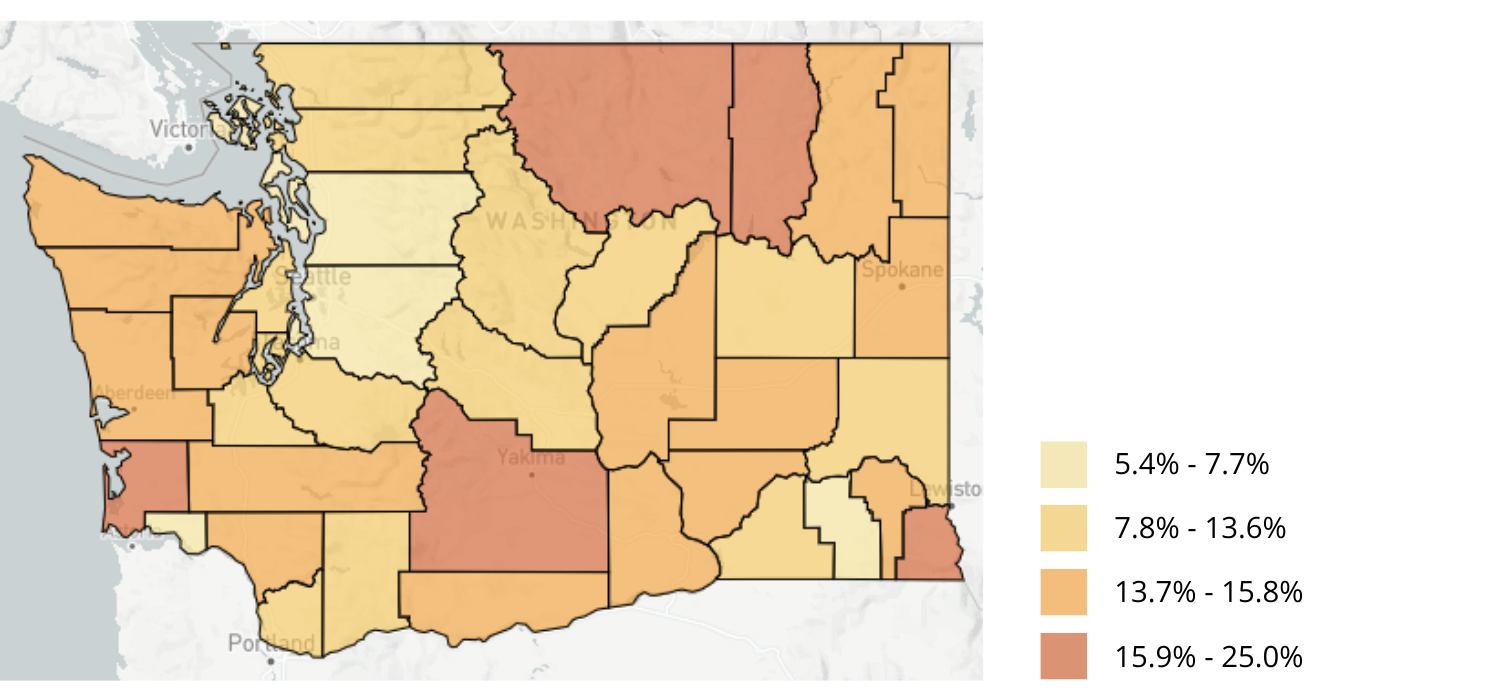
Image 1. Percent of 10th grade respondents who indicated they had been to a doctor or health care provider in the past two years.
Ongoing Work:
Expanding coverage options means ensuring everyone has access to insurance, as well as making sure there are enough health care providers, and enough of them working in the right specialties, accepting insurance, and taking on new patients. In recent years, Children’s Alliance has supported work specifically aimed at improving access to higher education for behavioral health providers, such as conditional scholarships from the Washington Health Corps in HB 1946 as well as supervision assistance in the form of stipends for supervisors in HB 2247 in 2024. Additionally, Children’s Alliance continues to lead child health advocates in the Health Care for Children and Youth coalition, where defense of health coverage and safety net funding remains a top priority in the face of severe Federal threats. It is important that future efforts to develop the health care workforce also promote diversity and equity within the workforce, as access to like-identifying providers is associated with improved outcomes for patients. Children’s Alliance remains committed to expanding access to health care for kids and families and urging lawmakers to erase every obstacle that prevents children and youth from receiving the regular care they need.
———
Data Sources:
Data Sources: The data used for this measure comes from the Washington State Healthy Youth Survey (HYS), which is conducted every two years. Data were retrieved in January 2025. Click here to access more data from the Healthy Youth Survey.
KIDS COUNT® is a registered trademark of The Annie E. Casey Foundation., Inc., and is used with permission of the Foundation.