DATA AND RESEARCH
Children’s Alliance conducts data and research projects focusing on our policy priorities: early learning, health equity, and economic justice.
As a KIDS COUNT state partner with the Annie E. Casey Foundation, we gather and analyze the best emerging data on how kids are doing in our state. By pairing hard data with personal stories from community members, we can help policymakers recognize and remove the barriers to opportunity that many of our state’s children face.
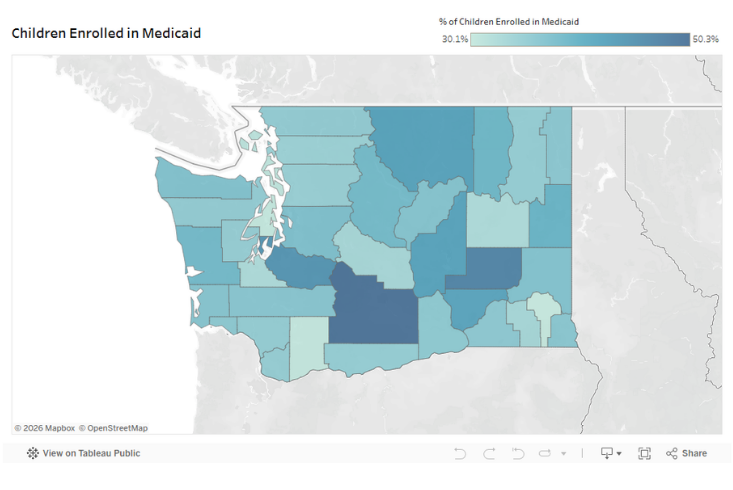
UNDERSTANDING THE IMPACTS OF H.R. 1 THROUGH DATA, INTERACTIVE MAPS, AND IMPLEMENTATION TIMELINES
Children’s Alliance has been monitoring, researching, and analyzing the potential impacts of H.R. 1. We have created this collection of interactive maps, along with summaries of key health policy changes and their implementation timelines, to illustrate how H.R. 1 is expected to affect critical health programs for Washingtonians, with a focus on Medicaid, the Supplemental Nutrition Assistance Program (SNAP), and hospital access.
KIDS COUNT® DATA BRIEF: THE STEADY RISE OF DEPRESSION AND ANXIETY IN TEENS IS HIGHLIGHTING EMERGING AREAS IN NEED OF PRIORITIZATION
To drive meaningful change for kids and families, we rely on data indicators—specific, measurable pieces of information that show how children are doing across key areas like health, education, and economic stability. One foundational indicator in our KIDS COUNT® data project is the rate at which adolescents report symptoms of anxiety and depression.
KIDS COUNT® DATA BRIEF: REGIONAL DISPARITIES ARE MAKING IT DIFFICULT FOR CHILDREN AND YOUTH TO SEE THEIR DOCTORS
One foundational indicator in our KIDS COUNT® data project is the percentage of children and youth in our state who regularly visit their health care provider. Findings from these data can help advocates and policymakers assess and improve our state’s healthcare system by removing accessibility obstacles.
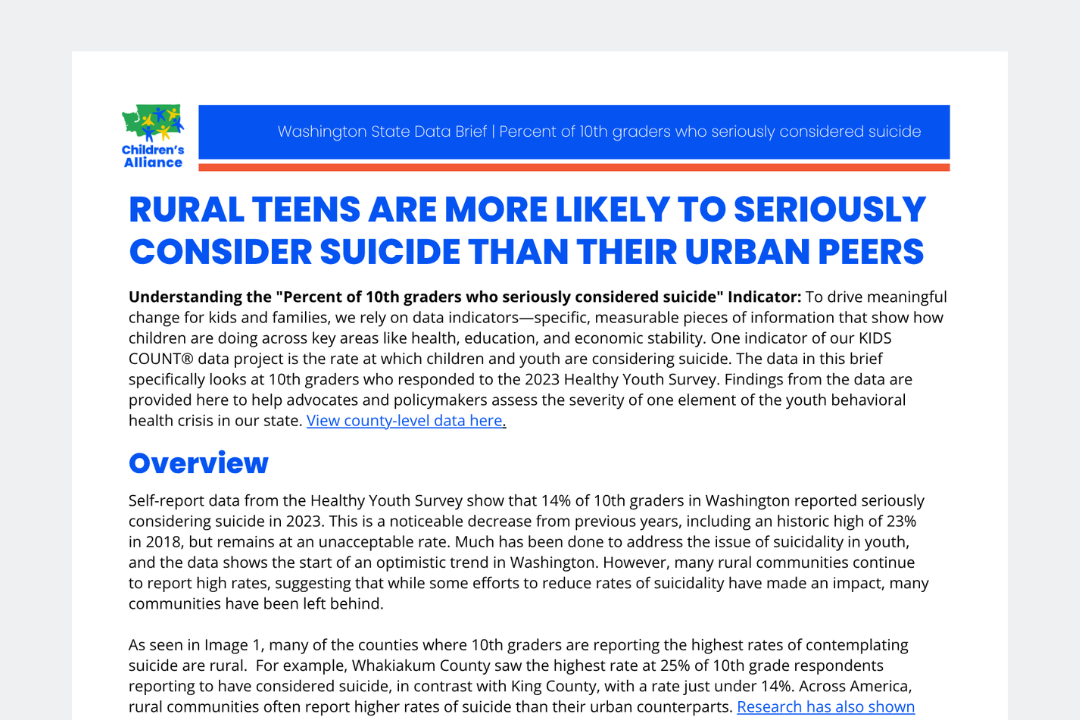
KIDS COUNT® DATA BRIEF: RURAL TEENS ARE MORE LIKELY TO SERIOUSLY CONSIDER SUICIDE THAN THEIR URBAN PEERS
The data in this brief specifically looks at 10th graders who responded to the 2023 Healthy Youth Survey. Findings from the data are provided here to help advocates and policymakers assess the severity of one element of the youth behavioral health crisis in our state.
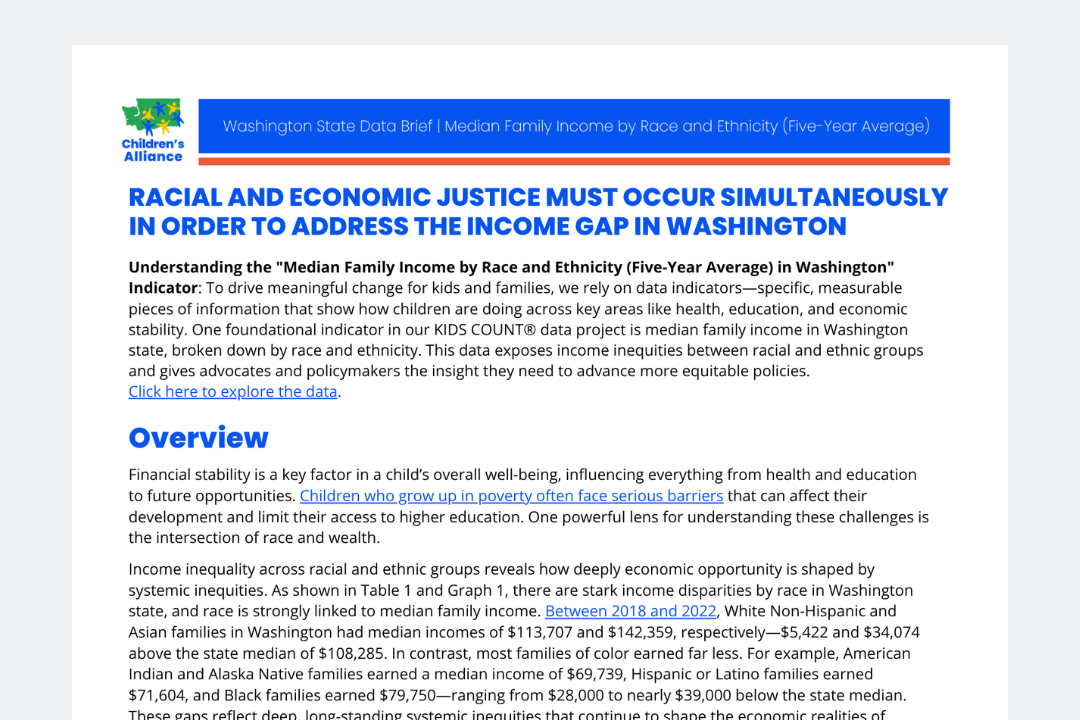
KIDS COUNT® DATA BRIEF: RACIAL AND ECONOMIC JUSTICE MUST OCCUR SIMULTANEOUSLY IN ORDER TO ADDRESS THE INCOME GAP IN WASHINGTON
One foundational indicator in our KIDS COUNT® data project is median family income in Washington state, broken down by race and ethnicity. This data exposes income inequities between racial and ethnic groups and gives advocates and policymakers the insight they need to advance more equitable policies.
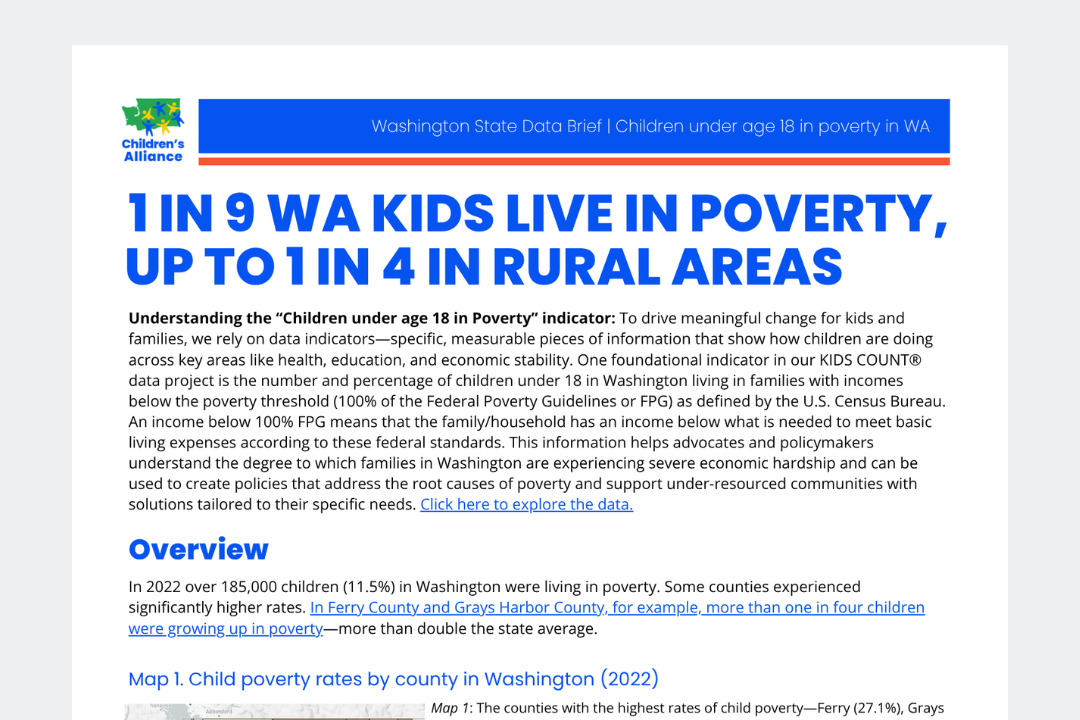
KIDS COUNT® DATA BRIEF: 1 IN 9 WA KIDS LIVE IN POVERTY, UP TO 1 IN 4 IN RURAL AREAS
One foundational indicator in our KIDS COUNT® data project is the number and percentage of children under 18 in Washington living in families with incomes below the poverty threshold (100% of the Federal Poverty Guidelines or FPG) as defined by the U.S. Census Bureau. This information helps advocates and policymakers understand the degree to which families in Washington are experiencing severe economic hardship and can be used to create policies that address the root causes of poverty and support under-resourced communities with solutions tailored to their specific needs.
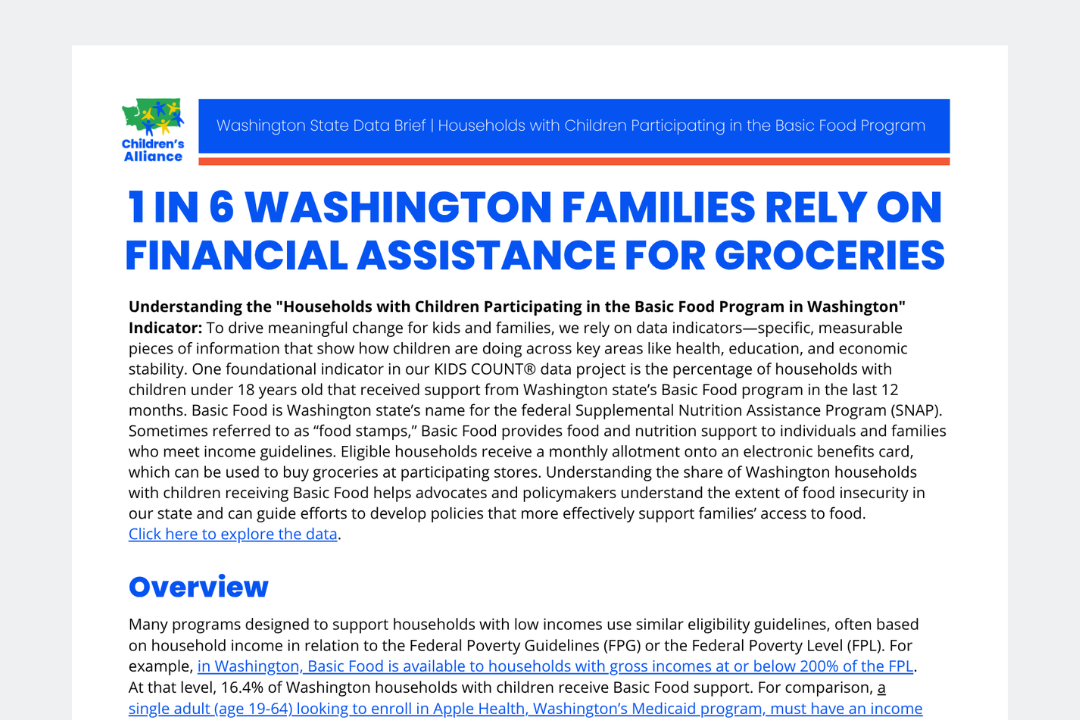
KIDS COUNT® DATA BRIEF: 1 IN 6 WASHINGTON FAMILIES RELY ON FINANCIAL ASSISTANCE FOR GROCERIES
Understanding the share of Washington households with children receiving Basic Food helps advocates and policymakers understand the extent of food insecurity in our state and can guide efforts to develop policies that more effectively support families’ access to food.
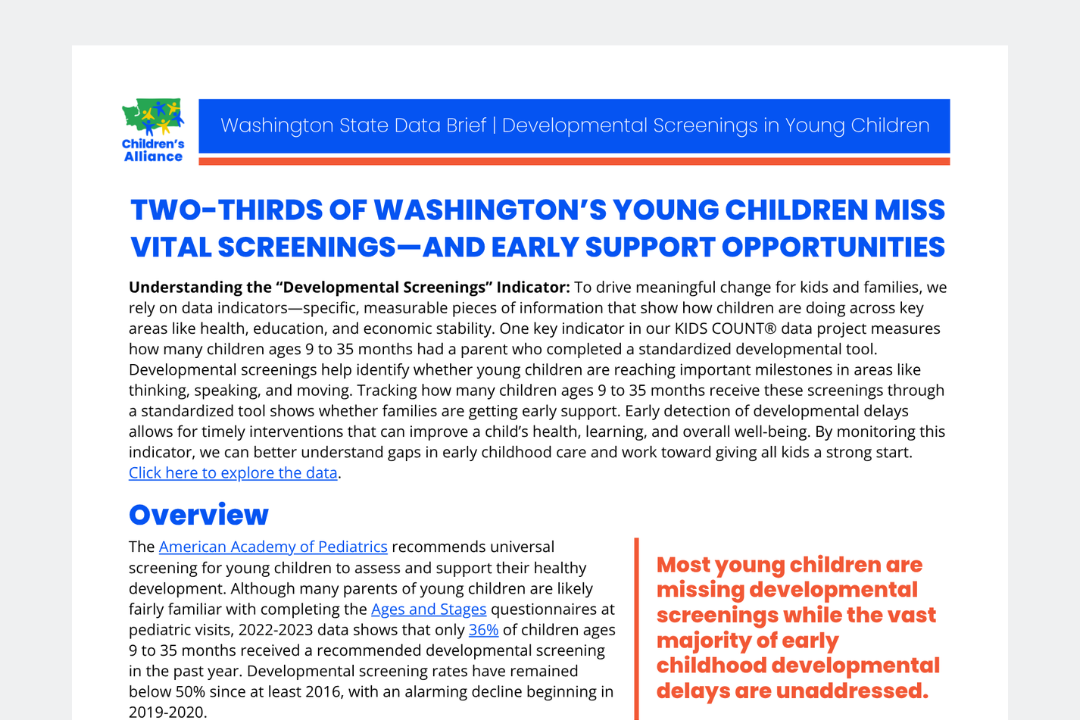
KIDS COUNT® DATA BRIEF: TWO-THIRDS OF WASHINGTON’S YOUNG CHILDREN MISS VITAL SCREENINGS—AND EARLY SUPPORT OPPORTUNITIES
One key indicator in our KIDS COUNT® data project measures how many children ages 9 to 35 months had a parent who completed a standardized developmental tool. Developmental screenings help identify whether young children are reaching important milestones in areas like thinking, speaking, and moving. Tracking how many children ages 9 to 35 months receive these screenings through a standardized tool shows whether families are getting early support.
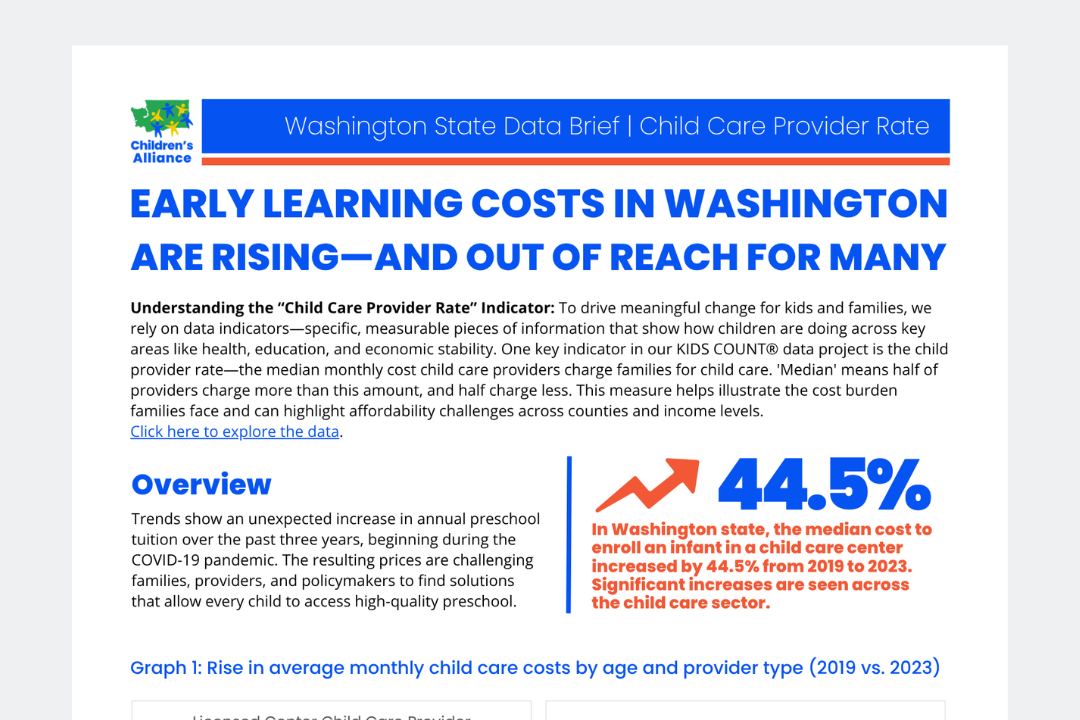
KIDS COUNT® DATA BRIEF: EARLY LEARNING COSTS IN WASHINGTON ARE RISING—AND OUT OF REACH FOR MANY
One key indicator in our KIDS COUNT® data project is the child provider rate—the median monthly cost child care providers charge families for child care. 'Median' means half of providers charge more than this amount, and half charge less. This measure helps illustrate the cost burden families face and can highlight affordability challenges across counties and income levels.
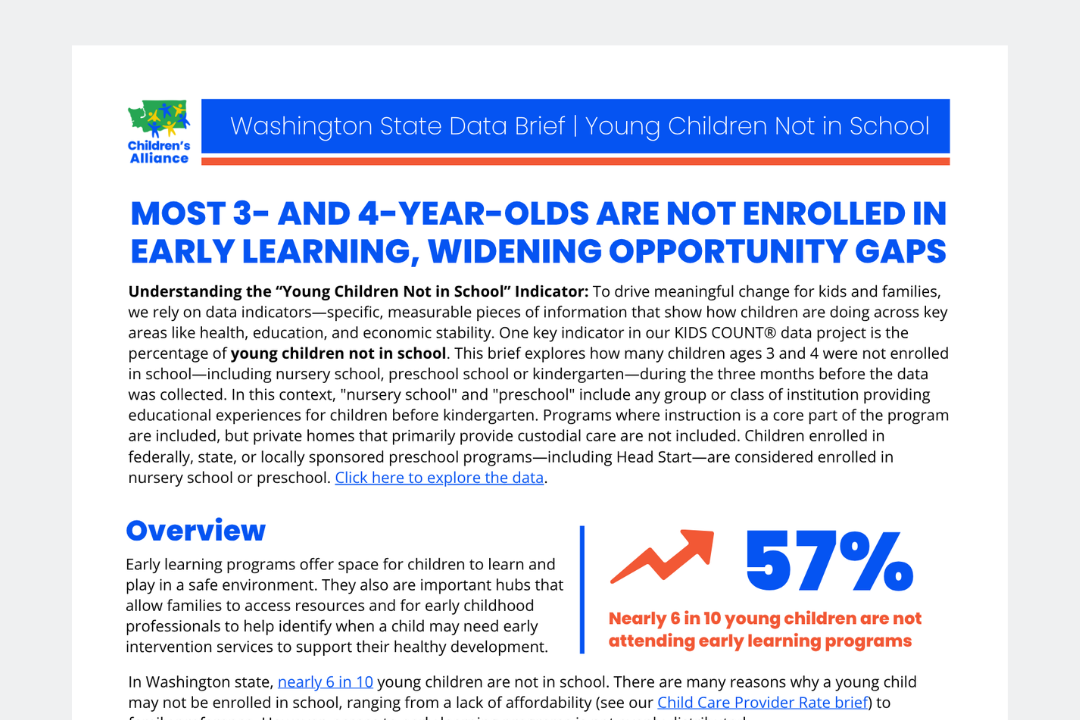
KIDS COUNT® DATA BRIEF: MOST 3 AND 4 YEAR OLDS ARE NOT ENROLLED IN EARLY LEARNING, WIDENING OPPORTUNITY GAPS
One key indicator in our KIDS COUNT® data project is the percentage of young children not in school. This brief explores how many children ages 3 and 4 were not enrolled in school—including nursery school, preschool school or kindergarten—during the three months before the data was collected. In this context, "nursery school" and "preschool" include any group or class of institution providing educational experiences for children before kindergarten.
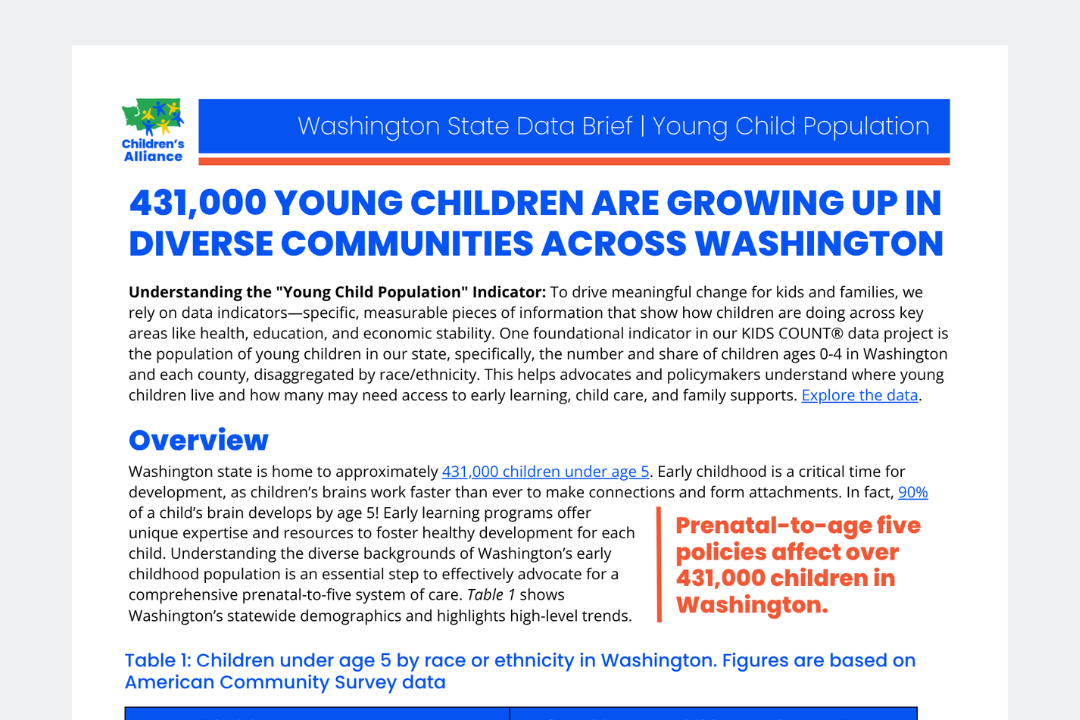
KIDS COUNT® DATA BRIEF: 431,000 YOUNG CHILDREN ARE GROWING UP IN DIVERSE COMMUNITIES ACROSS WASHINGTON
One foundational indicator in our KIDS COUNT® data project is the population of young children in our state, specifically, the number and share of children ages 0-4 in Washington and each county, disaggregated by race/ethnicity. This helps advocates and policymakers understand where young children live and how many may need access to early learning, child care, and family supports.

KIDS COUNT® DATA BOOK: WASHINGTON FALLS IN NATIONAL RANKINGS FOR OVERALL CHILD WELL-BEING
The Annie E. Casey Foundation’s 2025 KIDS COUNT® Data Book show’s that Washington leaders must do more to provide the support and resources children need to thrive in school and life.
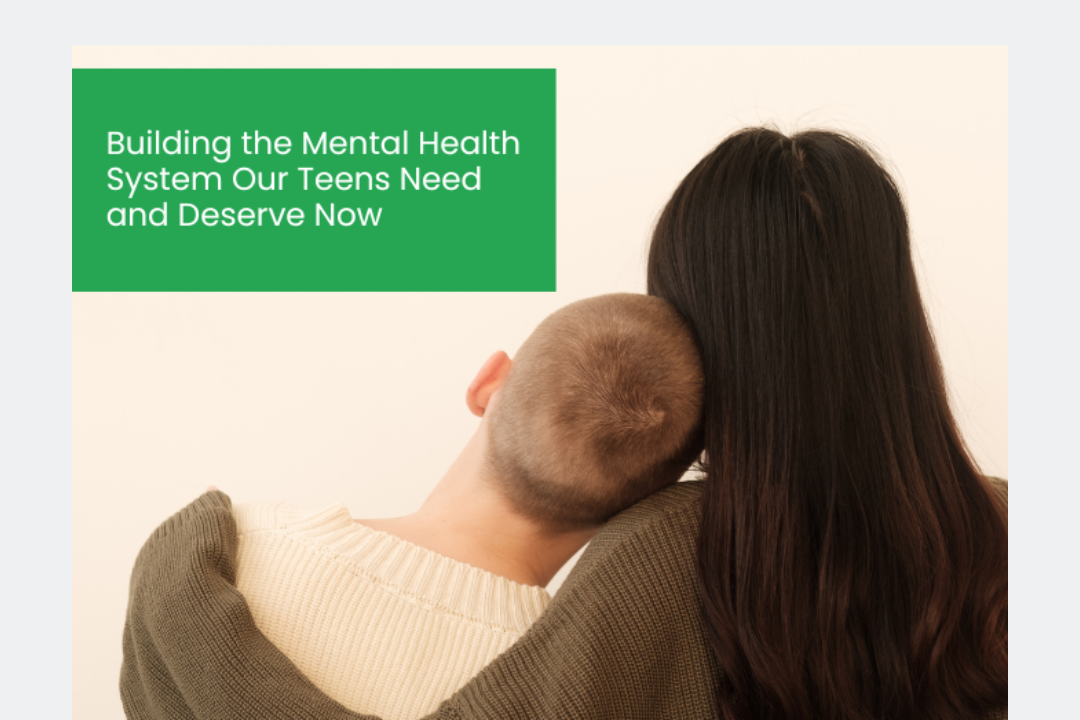
BUILDING THE MENTAL HEALTH SYSTEM OUR TEENS NEED AND DESERVE NOW
We provide an assessment of leading proposals to improve youth mental health in Washington, and offer recommendations for strategies that the state could implement to make major progress in the year ahead.
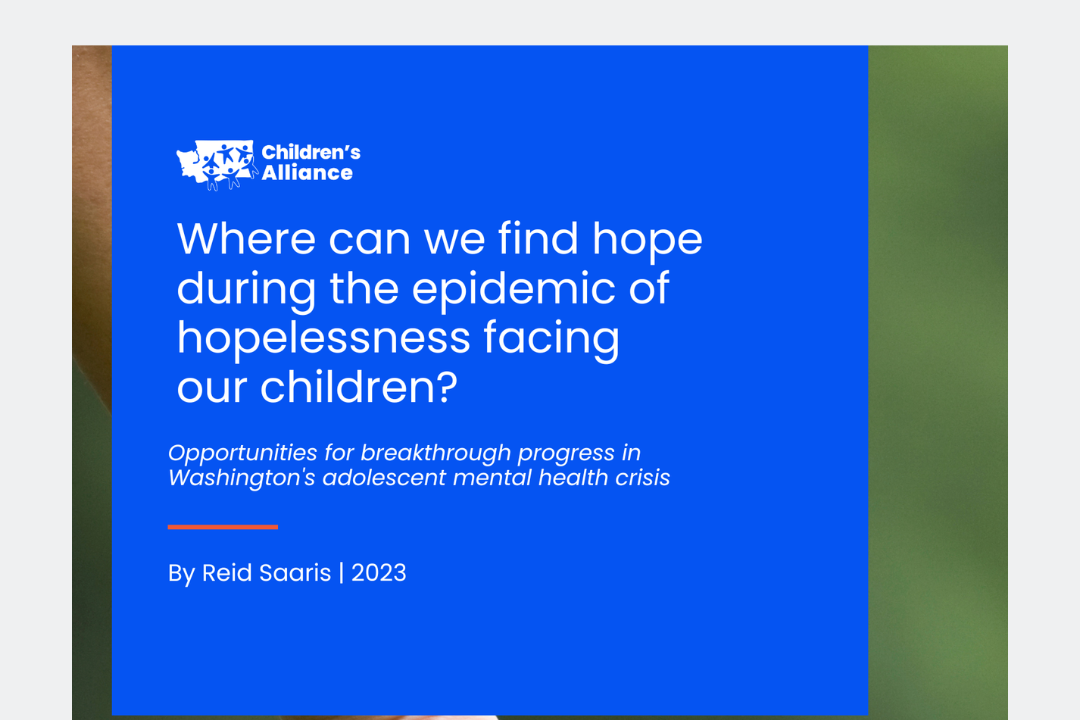
REPORT: WHERE CAN WE FIND HOPE DURING THE EPIDEMIC OF HOPELESSNESS FACING OUR CHILDREN?
This report presents findings from detailed analysis and identifies opportunities for breakthrough progress in Washington's adolescent mental health crisis.