DATA AND RESEARCH
Children’s Alliance conducts data and research projects focusing on our policy priorities: early learning, health equity, and economic justice.
As a KIDS COUNT state partner with the Annie E. Casey Foundation, we gather and analyze the best emerging data on how kids are doing in our state. By pairing hard data with personal stories from community members, we can help policymakers recognize and remove the barriers to opportunity that many of our state’s children face.
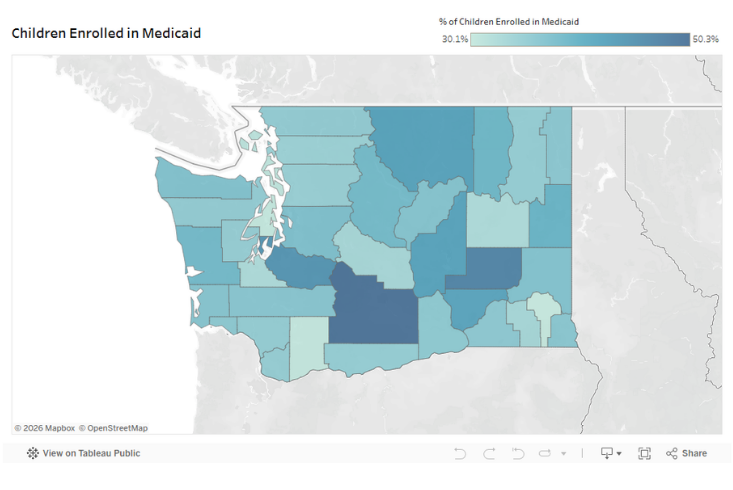
UNDERSTANDING THE IMPACTS OF H.R. 1 THROUGH DATA, INTERACTIVE MAPS, AND IMPLEMENTATION TIMELINES
Children’s Alliance has been monitoring, researching, and analyzing the potential impacts of H.R. 1. We have created this collection of interactive maps, along with summaries of key health policy changes and their implementation timelines, to illustrate how H.R. 1 is expected to affect critical health programs for Washingtonians, with a focus on Medicaid, the Supplemental Nutrition Assistance Program (SNAP), and hospital access.
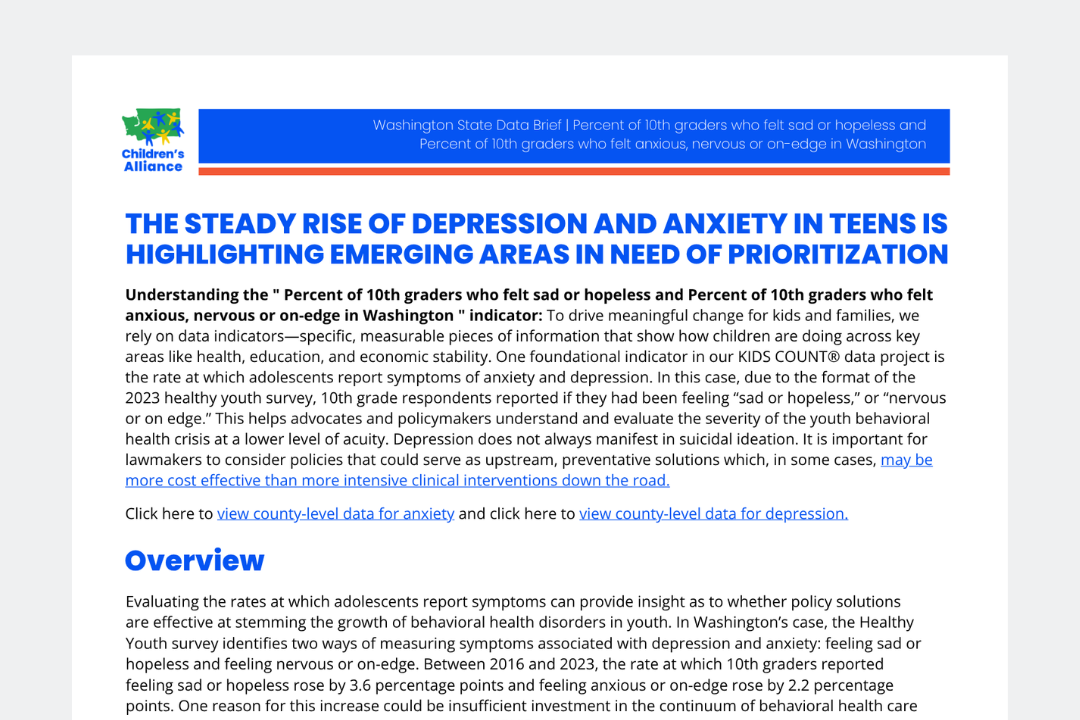
KIDS COUNT® DATA BRIEF: THE STEADY RISE OF DEPRESSION AND ANXIETY IN TEENS IS HIGHLIGHTING EMERGING AREAS IN NEED OF PRIORITIZATION
To drive meaningful change for kids and families, we rely on data indicators—specific, measurable pieces of information that show how children are doing across key areas like health, education, and economic stability. One foundational indicator in our KIDS COUNT® data project is the rate at which adolescents report symptoms of anxiety and depression.
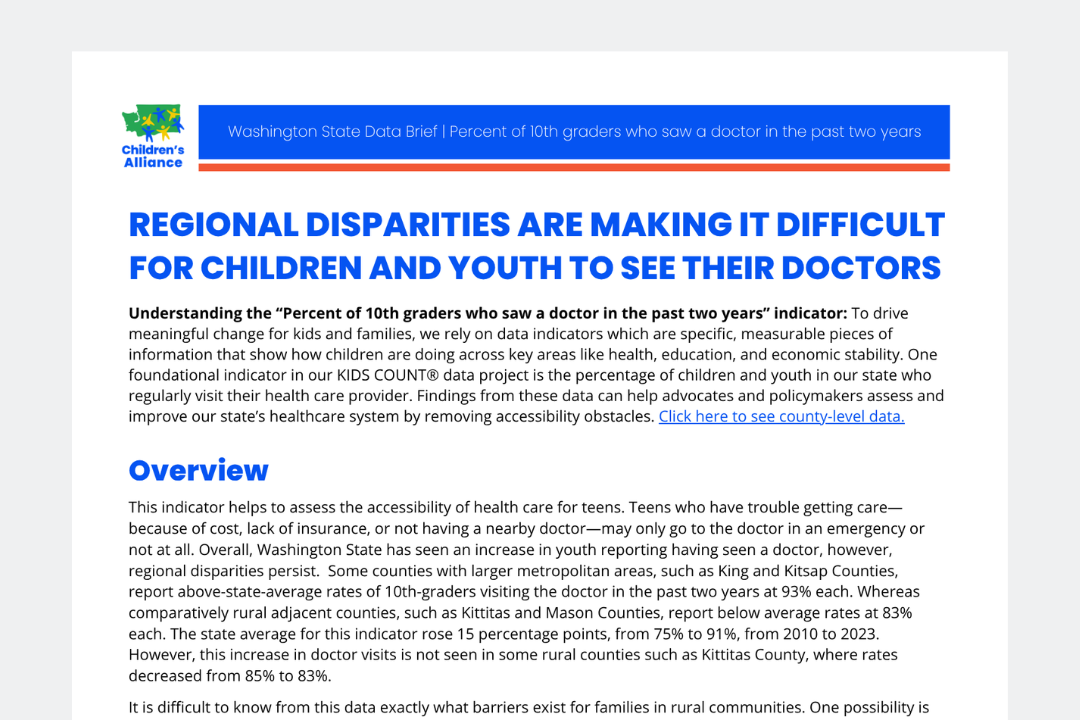
KIDS COUNT® DATA BRIEF: REGIONAL DISPARITIES ARE MAKING IT DIFFICULT FOR CHILDREN AND YOUTH TO SEE THEIR DOCTORS
One foundational indicator in our KIDS COUNT® data project is the percentage of children and youth in our state who regularly visit their health care provider. Findings from these data can help advocates and policymakers assess and improve our state’s healthcare system by removing accessibility obstacles.
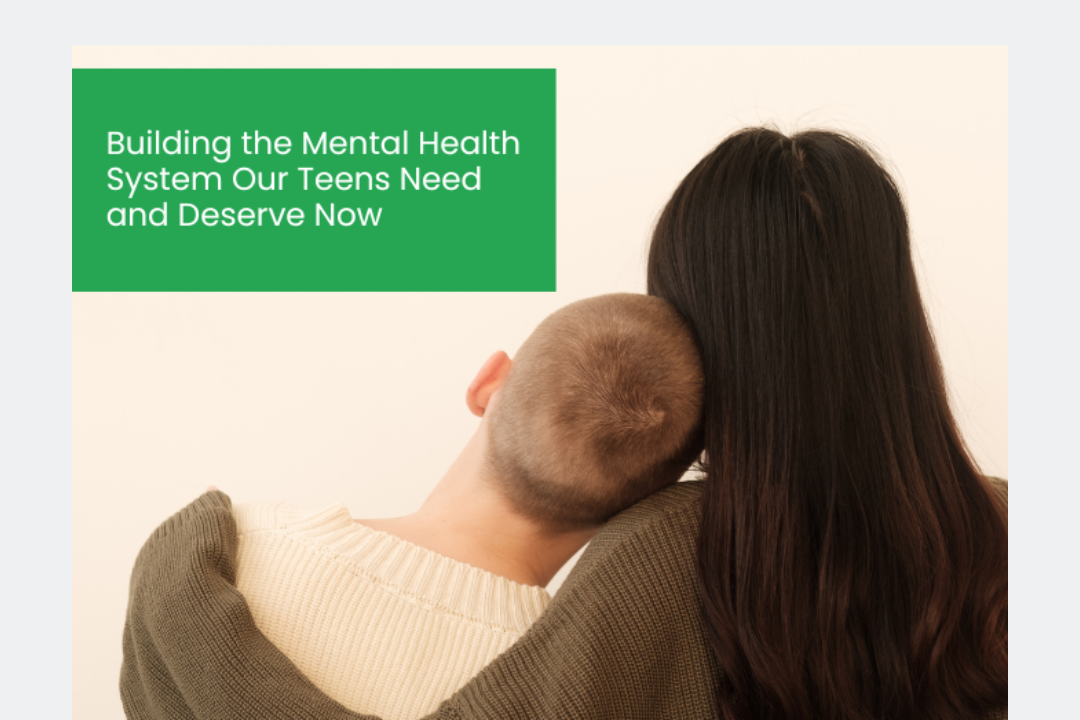
BUILDING THE MENTAL HEALTH SYSTEM OUR TEENS NEED AND DESERVE NOW
We provide an assessment of leading proposals to improve youth mental health in Washington, and offer recommendations for strategies that the state could implement to make major progress in the year ahead.
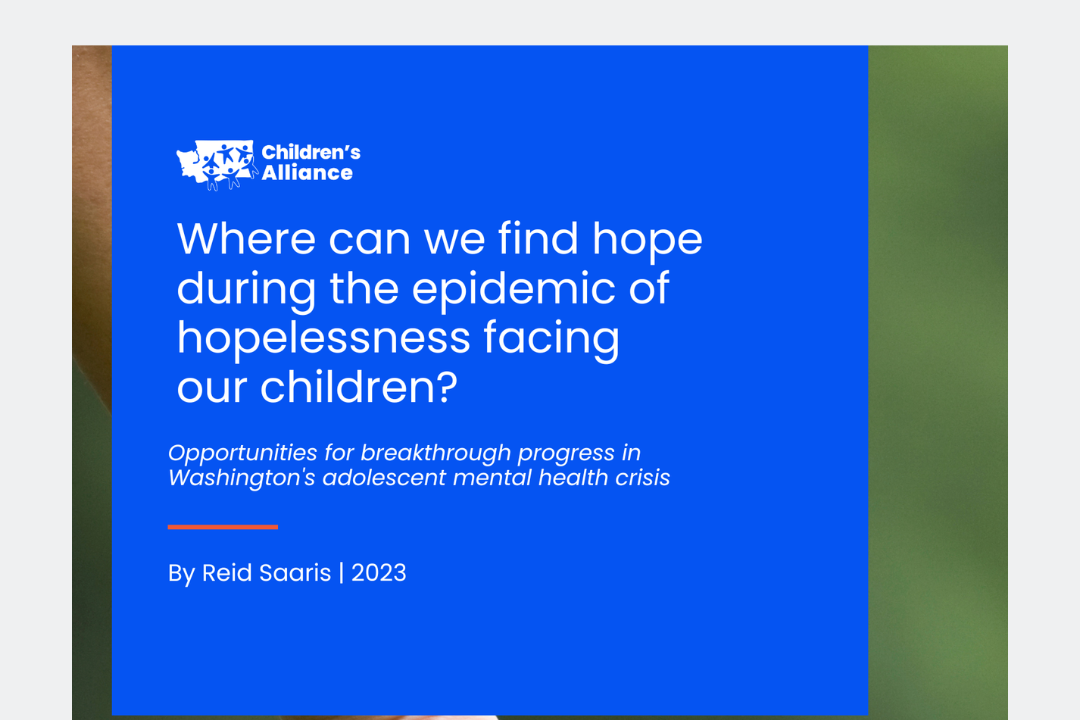
REPORT: WHERE CAN WE FIND HOPE DURING THE EPIDEMIC OF HOPELESSNESS FACING OUR CHILDREN?
This report presents findings from detailed analysis and identifies opportunities for breakthrough progress in Washington's adolescent mental health crisis.